




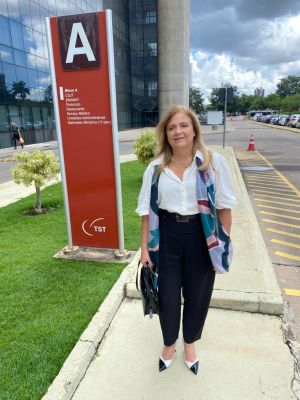
Through strategic meetings with public authorities, Abese presented proposals regarding the need for investment and regulation of the sector.
In 2022, the electronic security sector generated approximately R$11 billion in revenue, creating around 1 million direct jobs and over 3 million indirect jobs, according to the Market Panorama conducted by the Brazilian Association of Electronic Security Systems Companies (ABESE). Even so, some challenges related to legislation and market development hinder the integration of solutions for social well-being. Therefore, ABESE, which works to defend the electronic security market, met with various representatives of the public sector to raise awareness about the main challenges and demands of the sector.
“One example is the Private Security Statute, a bill currently being debated in the National Congress for several years. Abese ensured the inclusion of specific rules for the electronic security sector, differentiating it from other private security activities. Not everyone knows that the segment offers cutting-edge solutions, such as artificial intelligence, but is still subject to the rules of the 1983 legislation, and it is important that updating the text opens avenues for innovation; it is a relevant issue for everyone,” points out the president of Abese, Selma Migliori, who leads the association's legal team.
Abese presents the sector's needs.
Regarding the agenda, in April, a delegation from Abese, in Brasília, met with Senator Laércio Oliveira, as well as Senators Marcos Pontes and Sérgio Moro. For Abese's legal advisor, Lázaro de Sá, who was present at the visit, the approval of the document in its current state represents an important step forward for the market in several aspects.
“The Statute would have a very positive impact on labor, social security, and tax relations. In meetings with Senators, ABESE also discussed school security, addressing the various initiatives and technological advancements that can be implemented for security. Another point raised was the current tax scenario; electronic security is growing exponentially, but suffers from legal uncertainty,” informed the president of ABESE, who also emphasized the association's willingness to contribute to debates in the Legislative Houses to refine the application of Artificial Intelligence.
The delegation also met with the General Coordination of the Federal Police to discuss the statute, which is still awaiting a place on the Senate's agenda. Once approved, the Federal Police will play an important role in its regulation. In a significant change, both sides agreed to collaborate on studies and research for the purpose of regulating the Statute, and any other matters related to the electronic security market.
Still in Brasília, the Abese political advocacy group visited the Ministries of Labor, Social Security, and Technology. At the first, the conversation with the direct advisor of Minister Luiz Marinho focused on the risks faced by employees who use motorcycles as a work tool, considering the outcome of the legal action filed by Abese regarding the need for regulation, through a decree, of the criteria for hazard pay, via the formation of a Tripartite Commission.
Defense of condominiums with remote access control.
At the municipal level, Abese urgently requested information from the City Council of Limeira, a municipality in the interior of São Paulo, to defend the rights of condominiums that already use or wish to implement a Remote Access Control system. Since 2018, Municipal Bill No. 111-2018 has been under consideration in the city, aiming to rigorously restrict the market for this solution, which represents gains in security and cost-effectiveness for condominium residents.
In this latest attempt, Abese, with the support of local business owners, managed to postpone the project's approval by sending an official letter to all city council members, the vice-mayor, and the mayor, outlining the technical reasons against the proposal. However, according to Abese's president, Selma Migliori, the bill will continue to be monitored by the team, which has so far been successful in blocking it.
A ABESE It is a non-partisan organization whose philosophy is based on continuous dialogue with authorities at different levels. In all spheres, it is very important to have this defense of legal security in the activities of the electronic security market and its distinction from other security segments. Furthermore, it is important to have the backing and support of our members, who give us representation with public authorities. There is much to be done, but together we will be part of the solution,” he concludes.
SERVICE
Dates: June 13-15, 2023
Hours: 1 PM to 8 PM
Location: São Paulo Expo
Address: Rod. dos Imigrantes, km 1.5 — Vila Água Funda, São Paulo — SP
Accreditation: via the website https://easyeventos.com.br/v3/exposec/23/vis.
About Fiera Milano Brazil
Fiera Milano Brasil, the Brazilian subsidiary of Fiera Milano, one of the world's largest trade fair and congress players, attracting approximately 30,000 exhibitors and over five million visitors annually, became the majority shareholder of Cipa do Brasil in 2011, giving rise to Cipa Fiera Milano, now Fiera Milano Brasil. In Brazil, nine trade fairs are held representing diverse sectors of the economy, such as security, clean and renewable energy, pipes and fittings, cables, occupational health, surface treatments, window and door frames, rehabilitation technologies, inclusion and accessibility, among others. Key brands in the portfolio include Exposec, Fisp, Ecoenergy, and Reatech.
SOURCE: