





With the pandemic caused by the coronavirus, physical distancing measures are essential to control potential outbreaks of the disease. The security technology sector offers a range of solutions that can help in the daily operations of residential condominiums and businesses. “Access control via QR code or facial recognition, remote monitoring with the precision of fiber optics, and equipment that measures body temperature and the number of people per environment are already a reality in intelligent systems,” assures Saulo Requena, managing partner of MODU, a company in São José dos Campos (SP) specializing in this area.
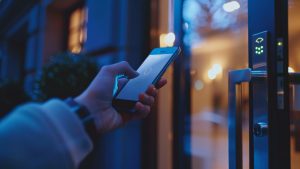
Through technology, it's possible to eliminate the risk of touching buttons and doorknobs. “Biometric validation through facial recognition has been highly sought after for access control systems in residential and commercial building entrances. Another resource is the QR Code, which is very practical and efficient for authorizing visitors. In this case, it's enough to authorize access beforehand, notifying the security company, and provide the QR Code to the guest – who can then validate entry with their own cell phone,” explains Requena. He points out that the QR Code system is still used for vehicle access, as well as adhesive tags for gate or barrier release (TAG).
Innovations also bring extremely useful tools to avoid crowding. “In the area of property security, the greater the circulation of people in an environment, the greater the need for control. Therefore, we have the possibility of controlling the movement of people using an application, in which a “check-in” is performed in each accessed environment. Another MODU tool ready for use is cameras that measure body heat, being able to identify individuals with fever and the number of people in a room. In this way, it is possible to verify which are the environments with the highest circulation and take measures, such as restrictions or intensification of the cleaning of the place.”
According to Requena, the systems allow for the integration of solutions. “We can enable various access modules. In a business building, for example, as soon as the visitor passes through the gate, the system can be programmed to call the elevator and automatically take the person to the necessary floor.”
Another highlight is remote monitoring, which has become more efficient with the use of fiber optics. “In the case of perimeter protection, fiber optic monitoring reduces circulation in condominiums and businesses. Even without needing an on-site team, security has become much more effective. With the technology, it's possible to know the location of an incident, which could be an intrusion, a climb, the breaking of something, or even an excavation. The location accuracy of fiber optics is 10 meters, while in traditional systems this area increases to up to 300 meters. In a large area, this makes all the difference in the agility of the security team.”
Trial by fire and increased demand – The pandemic scenario brought a real test for security and access systems in residential condominiums. The lockdown, which forced many people to work from home and shop using delivery services, brought a much higher flow of people to the entrances, as Saulo Requena reinforces.
EARTH


 Portuguese
  English