






A The Market Panorama survey, released by the Brazilian Association of Electronic Security Systems Companies (Abese), confirmed a growth of 18% in the sector in the country in 2022, a year in which it also recorded a significant revenue of R$ 11 billion. Thus, this segment also surpassed its 2021 development level, when it had an expansion of 14%.
In revealing these figures, the organization emphasized that the evolution reflects the renewal of products already implemented in older projects and the advancements provided through modern resources such as artificial intelligence and new telecommunications technologies, like 5G, in addition to condominiums adopting new remote access control systems.
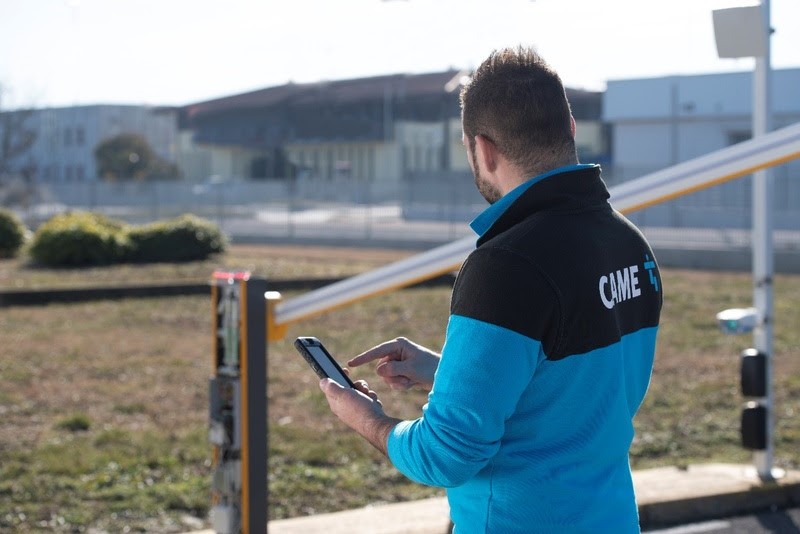
Analyzing this scenario, Marco Barbosa, director of the Brazilian unit of Came, a world leader in access automation equipment, stated that violence and rising crime rates in Brazil are driving the search for greater protection year after year, and consequently, this demand has kept this segment highly active.
“From my point of view, the current situation in Brazil fosters constant expansion in the security market. If we look at the last few years, we've seen significant growth, much greater (proportionally) than the growth of the country's economy as a whole. We see people's interest in having an additional resource to protect themselves or their assets. The situation and feeling of insecurity compel companies to invest in products and services,” Barbosa points out.
The Came executive, who is also a security specialist, highlights that the main protection systems currently used in Brazil are closed-circuit television (CCTV) monitoring, access control, and alarms against intrusion, fire, and for product protection. He points out that this sector has grown by overcoming, without much difficulty, the challenges imposed by the country's financial situation, aggravated by the continuous rise in inflation and recently hampered by the new coronavirus pandemic.
“"This sector grows a little more each year, despite the country's economy. It feels the effects of the economic situation, but very little, because people are always looking for security, and Brazil has been rapidly modernizing within this market to meet the large demand the country has amidst its high rates of crime and violence," he adds.
In 2022, according to the director, Came grew by almost 20%. And the expectation is to maintain this growth in 2023, when Abese projects an expansion of 19% in the electronic security market. For this year, Came do Brasil will expand its equipment portfolio, presenting all the new products during the next Exposec, an international security fair that will be held between June 13th and 15th in São Paulo.
Aware that Came needs to stay up-to-date and always try to offer the most modern products and services available, Barbosa emphasizes the importance of new technological advances and predicts that artificial intelligence tools will help to change, in the near future, the profile of existing surveillance projects by making them increasingly autonomous and less dependent on human operation.
“It is very difficult to predict what will be possible to do with this new technology and what stage it may reach, but it is certain that its constant advancement will promote a disruption, a break in continuity, as it will provide a new service system and modify the entire basis we have today for its execution. This is also because artificial intelligence has a very broad scope and can provide answers and solutions to problems much more quickly than we previously imagined would be possible,” emphasizes the expert.
“Security monitoring systems, for example, I believe that in the near future they will be increasingly powered by artificial intelligence. However, just as it will replace many human services, people will remain important to do what machines are not yet able to do, which is decision-making with an analysis of data to promote more assertive actions,” he emphasizes.
Industry drives sector growth.
This latest survey released by Abese also indicated that the electronic security sector is currently composed of more than 33,500 companies in Brazil and highlighted that, together, they are responsible for generating one million direct jobs and more than three million indirect jobs. The main driver of the segment is the industry, which, according to the entity's research, has 901,300 of its companies willing to hire employees under the CLT (Brazilian labor law) regime to work in technical areas. In addition, 721,300 members of this market have opened vacancies in commercial departments and 54,510 in administrative positions.
“I believe that the projected growth of 19% for this sector in 2023 is consistent with the current state of the country's security market. Technology is not a static product; it requires constant updating of equipment and services. And when we talk about security, the only certainty we have is that criminals are trying to circumvent existing systems. The feeling of insecurity compels people to invest in protection. If no abrupt event occurs that changes this scenario, the trend is for this segment to expand,” emphasizes Barbosa, also commenting on another piece of data revealed by Abese, that the industry was the field of electronic security that grew the most in 2022, with 22% of growth.
“Amid the need to adapt to new technologies and offer better equipment and services against crime, the industry is responsible for the hardware and software aspects, generating products that will keep the sector's supply chain moving. And it drives not only the workforce but also production. Companies that are concerned with remaining in the market are practically forced to invest in technology and research to update equipment or launch new products,” concludes the expert.
CAM from Brazil
Present in Brazil since 2010, with headquarters in Indaiatuba/SP, the CAME Group is an Italian company with over 50 years in the market and a world leader in access automation products, holding ISO 9001 and ISO 14001 certifications. The company is dedicated to excellence in high-quality equipment and technical assistance, innovation and performance in the access control and security segment, developing customized projects for clients in different market segments.
With branches in 20 countries and more than 480 exclusive distributors worldwide, CAME controls seven manufacturing companies (CAME Cancelli Automatici, BPT Sistemas de automatização residencial e industrial, Urbaco, Parkare, Go, Nepos), in addition to CAME Service Italy, which specializes in customer support.
Source: www.inewsbr.com

 Portuguese
  English