






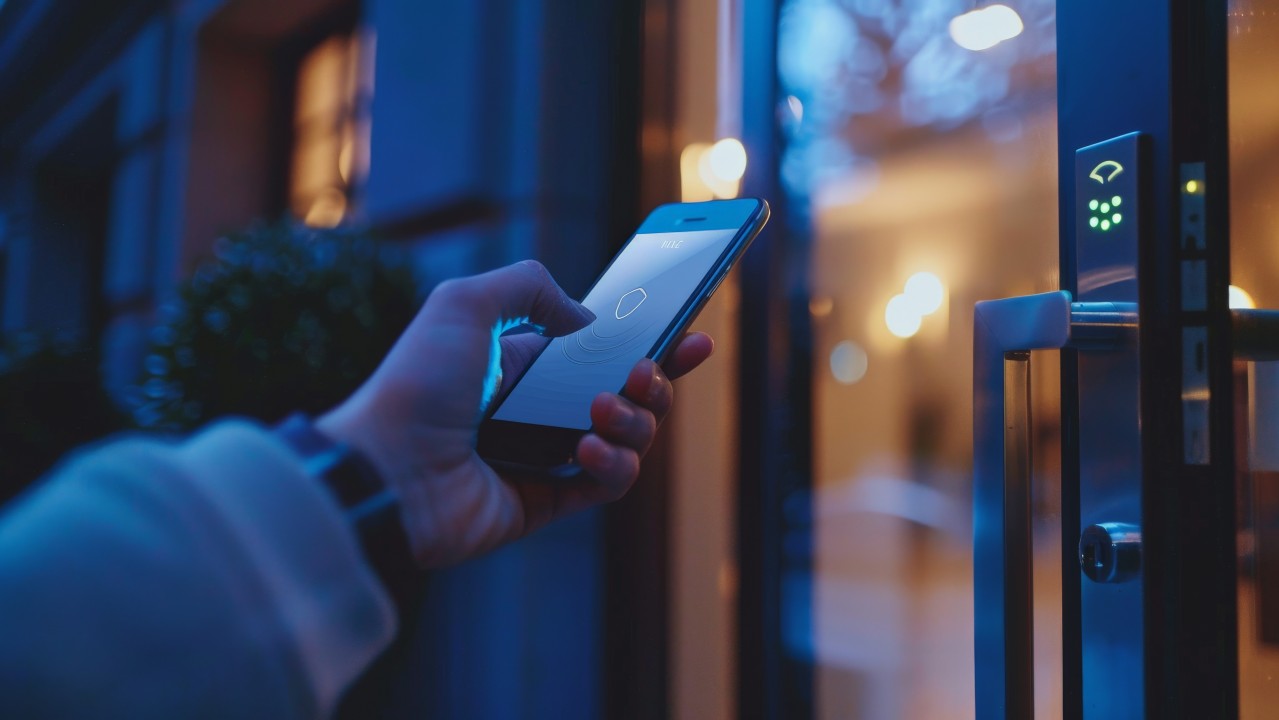
The Brazilian electronic security market is experiencing continuous growth. In 2024, the sector recorded average revenue of R$14 billion, resulting from a growth of 16.11% compared to the previous year, according to the 2024/2025 Panorama conducted by [organization name missing]. ABESE – Brazilian Association of Electronic Security Systems Companies. This movement reflects the consolidation of technological solutions, such as remote access control, which is already present in more than 14,000 condominiums across the country.
It's not just about modernization. The growing adoption of remote access control reflects an important cultural shift: a migration from a logic based on trust to security structured around processes, technology, and data. After implementation, condominiums report significant gains in efficiency and protection. Operational costs can fall between 40% and 60%, especially when replacing 24-hour security guards, but the benefits go beyond that: uninterrupted service, detailed access records, greater administrative control, and, most importantly, the elimination of the risk of direct coercion of security guards.
Therefore, when we see initiatives like the recent law passed in the Federal District, which attempts to limit the use of remote access control without valid grounds, we perceive a regression that ignores the progress achieved, hinders innovation, and threatens the very security of society. As president of ABESE, I reaffirm our commitment to defending modernization and the freedom to do business, because we believe that technology should be at the service of protecting Brazilians and not be hindered by unfounded measures.
The expectation is that, by 2025, the remote concierge sector will grow by 25.31%, supported by technological advancements, greater professionalization of companies, and, of course, the maturation of the market itself. But it's important to emphasize: technology alone doesn't solve everything. It needs to be accompanied by education and awareness, highlighting the importance of combating seemingly harmless practices, such as "holding the door" to allow someone to enter the building without identification. This gesture of kindness can be the loophole criminals are looking for.
Today, the tools are even more sophisticated. The use of facial recognition in condominiums grew by 47% between 2022 and 2024, consolidating itself as a first layer of security, often complementing on-site doormen. Furthermore, the incorporation of Artificial Intelligence has accelerated the evolution of solutions. In just one year, the use of AI in security products increased from 54% to 64,3%, with a particular emphasis on access control and biometric identification systems.
This integration between technology and efficient management has created a culture of security in Brazilian condominiums that literally begins at the front door. Remote access control should not be seen merely as a cost-cutting tool, but as a model that promotes a safer, smarter, and more sustainable environment.
The challenge now is twofold: on the one hand, to continue innovating with technological resources; on the other, to reinforce the education of residents so that they adopt safety habits compatible with this new scenario.
SOURCE: LinkedIn Selma Migliori


 Portuguese
  English